Three weeks in Shanghai, Beijing and Hong Kong: The view from an investor and regular human (Part 1)
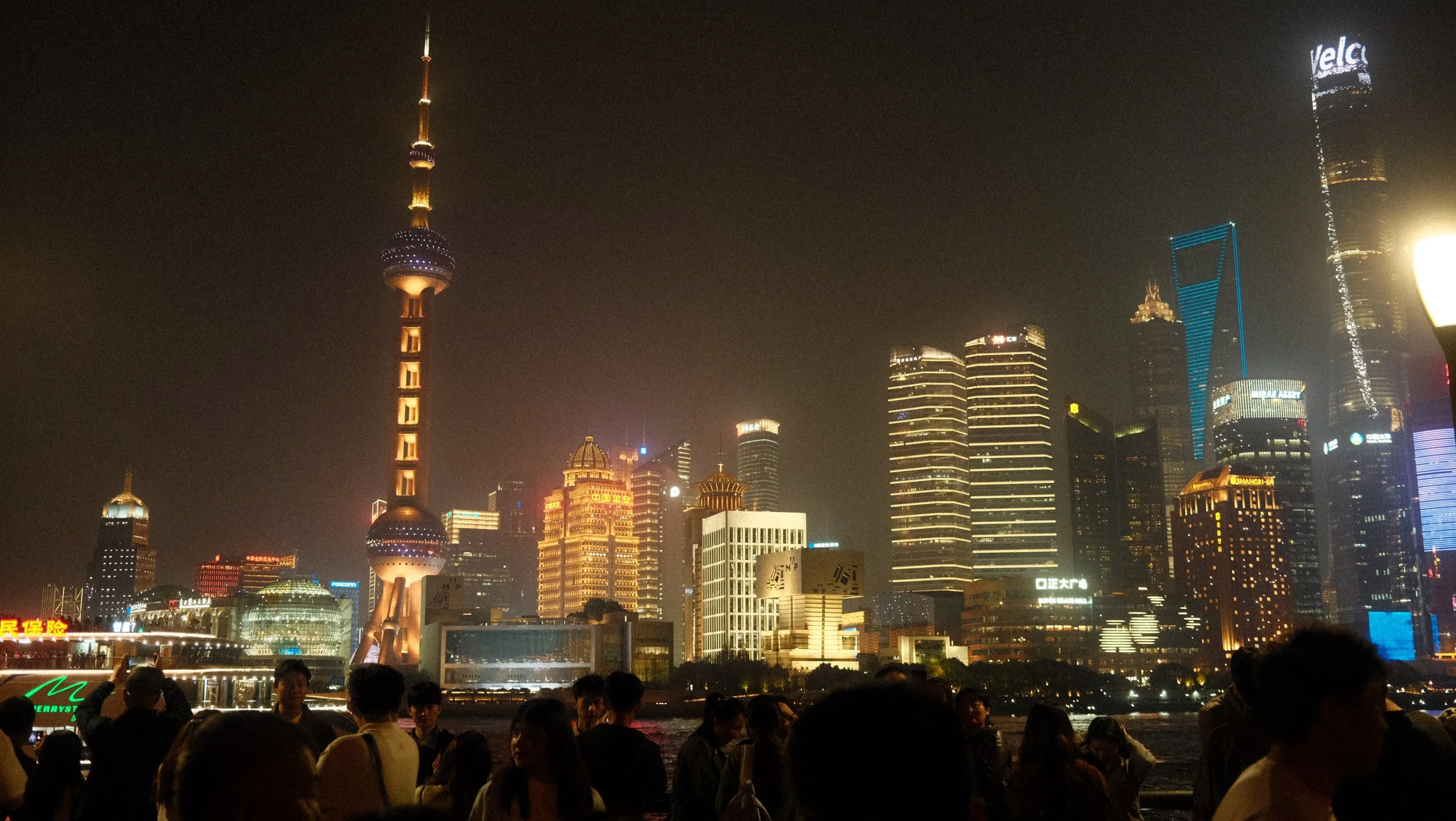
Preface
I spent three weeks in mainland China and Hong Kong on an investor conference. It was two things back-to-back: a three-day bus tour through Beijing and Shanghai meeting mostly Chinese internet companies, analysts and experts, followed by a longer flagship conference in Hong Kong covering broader Asian consumer and tech companies, Korean entertainment and beauty, Southeast Asian platforms, luxury, autonomous driving and a couple of the Macao casino operators.
After fifty-plus individual and group meetings, I got a clear sense of how company management, investors, and the general public are all thinking.
Note that I do this for a living. I work as an investment analyst, so some of the language here is professional habit. But this isn't a research note. Not every view is backed by data. Much of it is anecdotal and my own opinion.
I went in with three questions:
- How different is China compared to how the media portrays it?
- What is really going on with the Chinese consumer?
- Where is China winning on AI relative to the United States, and where is it losing?
I've answered each of those, though not neatly.
What follows
- My view on the strategic direction of each region (covered below)
- The Chinese consumer, in detail including the 'China Macro'
- AI in China: a layer, not a platform
- The ByteDance problem
- The Good and the Ugly: what sectors, industries, regions and companies stood out to me
My view on the strategic direction of each region
This is the first of five pieces from three weeks of meetings in China and Hong Kong. I've come away with one primary thesis:
Before I get to the companies, I want to lay out the worldview that makes this thesis make sense.
China and the US both seem to be jealous of each other. The Chinese consumer wants the prospect of getting extraordinarily wealthy. The American consumer wants more choice and lower cost of living. Each side has what the other is asking for.
The first question I tend to ask myself on these trips is Do I want to live here? The answer was more nuanced than I expected, and what each system is trying to achieve turned out to be the most useful frame.
The two regimes
The US prioritises individualism and protects IP. It rewards companies that build something unique, and over time that creates near-unbreakable moats. The Magnificent Seven being the obvious example. If you invested in US equities over the last twenty years, you did very well. But the cracks are starting to show. Investors and people inside those industries are making extraordinary money, but less of it is flowing to the general population. The narrative you hear more and more in America is that the rich control the government.
In China, the government is clearly in control, actively (at least most of the time) stopping wealth from accumulating in the hands of a few, something the West is fighting for now. It actively blocks the formation of powerhouse ecosystems; the Tencent and Alibaba crackdowns are the clearest evidence. This was not just a view from myself. One of these big technology companies stated:
The result: China produces awesome products, but intense competition means shareholders don't capture the value the way US shareholders do given the lack of pricing power. For an investor making a capital allocation decision between the two markets, this is a significant negative and has been the single biggest drag on Chinese equity returns for the last decade.
There are signs China has recognised the equity discount as a problem, and there have been recent policy shifts to address this. First, a bigger push toward shareholder returns in the form of buybacks and dividends. Second, a push for higher quality competition (such as cracking down on the subsidies provided by the delivery platforms JD and Meituan), which was purely a pricing war providing no long-term value to the companies.
For the broader population, though? You get excellent products at great prices. Look at Tesla vs BYD. Uber vs Didi. Apple vs Xiaomi. Starbucks vs Luckin. To me, this created an environment where:
So where would I rather live? It depends on what I want from life.
In the US, you're given more tools to get out of the grind, and the possibility of getting seriously rich. But if you don't break through, or if you'd rather live a quieter life, it's a hard system where cost of living and the wealth gap are spiralling out of control.
In China, the upside is more challenging, but the floor is higher. Getting out of the rat race is harder.
Being a rat, though, I think is better.
The old assumption: "Made in China" meant cheap and low quality. My view is that this is over.
For the last twenty years, manufacturing across dozens of industries was concentrated in China. The supply chain worked like this: a Western brand: Nike, Adidas, Apple headquartered in the US or Europe would design products, manufacture them in China, and finish them back home. Over time, China absorbed the technology, processes and operational knowhow. As GDP rose and labour costs climbed, brands began moving manufacturing to Southeast Asia, Bangladesh, and parts of Africa.
What emerged from that twenty-year apprenticeship is a generation of Chinese brands with the same manufacturing and R&D capability as their Western counterparts, without the developed-market cost structure.
China is now exporting these goods under Chinese brands. A few examples:
- Consumer tech: TikTok
- Apparel and outdoor: Anta Sports (partially owns Arc'teryx and Salomon), Li Ning Sports, Laopu Gold
- IP and merchandise: PopMart
- Appliances: Midea, Haier, Xiaomi
- EVs: BYD, plus most of the Chinese EV competitor set
- Display panels: China is now the global market leader
Did you know China now makes more than 60% of the world's television panels?
Chinese brands will find it hard to break into heritage premium positioning. The Hermès, Rolex, Ferrari tier is about a century of brand equity that can't be manufactured (although maybe bought?). But for functional products, Chinese output is now as good as or better than their Western equivalents, often at a fraction of the price. Electric vehicles. Home appliances. Drones. Solar panels. Robotics. Consumer electronics.
The Chinese consumer has noticed. Ten years ago, even domestic consumers preferred Western brands because of the quality guarantee. That's changed, and it accelerated through two events: the pandemic, which disrupted foreign supply chains, and the trade war, which gave rise to Guochao: the domestic brand preference movement. What started as a patriotism trade has turned into a quality trade. Younger Chinese aren't tied to older-generation brand loyalties. They have research at their fingertips and, for now at least, they don't see the point of paying a Western brand premium when domestic brands are often genuinely better. Better designed for Chinese bodies, Chinese tastes, Chinese use cases, and at lower prices.
Geopolitics has quietly shifted in China's favour
This was a surprise. From inside China, talking to IR teams, experts and Western researchers who've lived in China for twenty years, the mood isn't defensive. It's quietly triumphant.
The DeepSeek moment: the January 2025 release of DeepSeek R1, a Chinese open-source model benchmarking close to US frontier models at a fraction of the cost was the psychological turning point. Malaysia announcing it would use Huawei chips after the US export ban was interpreted internally as proof that the Global South doesn't want to be locked into a US-only technology stack. The Iran-oil backdrop, which you'd think is bad news for everyone, is being read inside China as net or relative positive (gross still negative, of course). China is largely energy-independent on coal and renewables. Wind and solar hit 22% of the grid in 2025, with oil the remaining exposure, and they've been preparing for an oil shock for years.
Western multinationals, meanwhile, are finding China meaningfully harder. Senior US executives are reportedly wary of visiting. One prominent figure's framing, albeit a notable China bull, was the most striking:
Whatever you think of the politics, that's a factual statement about supply chains, pharmaceutical intermediates, and critical materials.
Where this leads
Put those three observations together: the regime difference, the quality upgrade, the geopolitical shift, and the investment thesis writes itself. Chinese companies competing in domestic markets will continue to produce outstanding products without producing outstanding shareholder returns. The ones that break out of China and compete globally can do both. Those are the businesses I want to own.
Over the next four pieces, I'll walk through where this is playing out:
- Part 2 - The Chinese consumer. There are two Chinese consumers now, and they're buying completely different things.
- Part 3 - AI. Why China's approach is fundamentally different from the US, and why investors are mis-framing the race.
- Part 4 - The ByteDance problem. The most important Chinese company in the world is not listed. Here's what to do about it.
- Part 5 - The companies. The specific names I came back thinking differently about.